
Baldwin Neighbors Block Sources
The immediate block has several official record layers, but each has a narrow purpose. County GIS depicts parcel geography and street context. The Real Estate Portal supplies the official public parcel card. Recorder documents connect legal interests through instruments and plans. Borough files can provide a dated project or inspection record when released. An elections request and a community contact are governed by different rules. None should be treated as a household list for Baldwin neighbors.
| Source | What It Shows About a Block | Access |
|---|---|---|
| Allegheny County GIS Viewer | Parcel shapes, street orientation, layers, measurements, and selected parcel information | Public browser map; verify a parcel in the property record |
| Real Estate Portal | PIN, situs, owner field, municipality, and selected title or value references | Free by address or PIN; not a household roster |
| Division of Real Estate | Recorded ownership documents, plans, and legal descriptions | Free index with stated image and copy channels |
| Address Points and Centerlines | Address ranges, ZIP and municipality sides, aliases, and parcel links | Public GIS data; no person result |
| Lawful elections request | Specified registration-list data under Election Code controls | Request, identification, and use limits; no online publication |
| Borough permit or RTKL record | Address-specific project, inspection, or municipal chronology | No public search interface located; make a narrow request |
| Borough community links | Public civic organization contacts | Contacts only, not member rosters |
A nearby parcel can establish an adjacent property relationship. It cannot establish who occupies the structure, who receives private services there, or who belongs to a family.
Note: A map gives spatial context, while the property portal supplies the current public parcel card.
See Baldwin Neighbors on GIS
The Allegheny County GIS Viewer is the safest first tool for the block around an address. Search the address, identify the selected parcel, then pan and zoom to the contiguous parcel polygons. Turn on parcel, address, or street layers as needed. The documented controls also include parcel information, area and linear measurement, basemap changes, map printing, and sharing. The research did not verify a buffer selection tool, so a search should remain focused on the selected parcel and its directly adjacent map context.
- Locate the Baldwin street address and record the returned parcel or PIN where shown.
- Pan to the parcels that share a boundary or street-side relationship with the selected property.
- Use layers and measurement only to understand the parcel layout, not to identify households.
- Open each necessary parcel in the Real Estate Portal for the official record card and retain the date checked.
The GIS layer is spatial evidence. The parcel card is the official property-record step. Keeping those roles separate prevents a map label from being mistaken for a conclusion about Baldwin neighbors.
The County’s free property search shows the address and parcel-number entry modes used after a GIS selection.
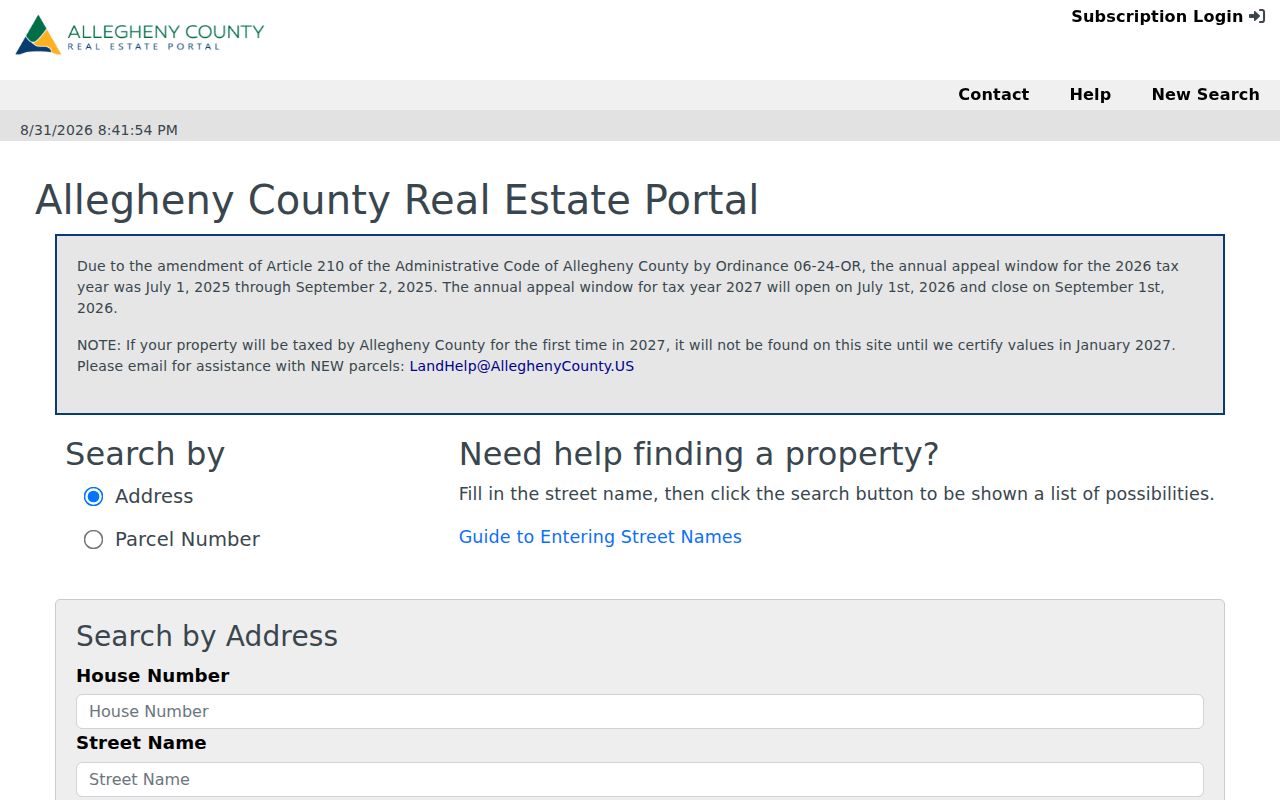
Enter a street name without its suffix and select Baldwin Boro where known. A street-only result can paginate, so a house number is useful for a single parcel.
Trace Baldwin Neighbor Parcels
The County portal shows a parcel ID, situs address, municipality, owner field, sale and recording references, deed book and page, and an owner-mailing field. Use those facts to verify the property that GIS selected. If a block-history question needs more than the card, take the deed book or instrument reference to the Division of Real Estate recorder search. The legal description, map block, lot, and plan can connect an adjacent parcel even when a street label changes.
For a deed trail, the buyer is generally the grantee on an acquisition deed and the seller is the grantor. Search the prior grantor as a grantee to locate an earlier acquisition, compare legal descriptions, and stop if the lot or description no longer agrees. That is a property-history workflow. The full named-street process belongs in the Baldwin Street Directory, rather than turning a block search into a long street inventory.
Note: A recorded owner can differ from an occupant, and a deed transfer does not identify every person who used the address.
Baldwin Neighbors and Mailing Fields
The county’s parcel card distinguishes its situs line from its owner-mailing line. Situs means the physical parcel location. The mailing line is where the record owner receives correspondence, and it can be elsewhere or use a different ZIP. The inspected Baldwin Boro public-utility sample used Pittsburgh 15236 for its situs while retaining a separate mailing field. That comparison is a useful guardrail: an owner name or mailing address does not establish present physical presence at the parcel.
| Official record layer | Best use on a Baldwin block | Limit |
|---|---|---|
| County GIS and property records | Map a parcel and check the displayed property facts | They do not supply household membership. |
| Recorder instruments and plans | Test a legal title or lot connection | They document transactions, not current living arrangements. |
| Commercial compiling category | May present unsourced name or address suggestions | It can be stale or conflated and is not a substitute for a custodian. |
Compare independent official sources when an identity question matters. A convenient compilation or a single property field should never turn into a list of people on the block.
Baldwin Neighbors Across Boundaries
A block can cross a municipal or ZIP boundary. County Street Centerlines store left and right municipality names, ZIP codes, and address ranges, while Address Points add street components, ZIP, edit date, and parcel ID. Baldwin Borough address points return four ZIPs, 15207, 15210, 15227, and 15236. A postal city label can also say Pittsburgh. Those facts describe geography and routing, not a person’s presence or the governing municipality for every address.
For a mismatch, keep the searched address, returned situs, ZIP, municipality, and PIN together. Baldwin Borough is the local authority for assigning or correcting an address; County Address Management maintains the consolidated 911 and assessment data; the recorder controls legal description and title history; USPS confirms mail routing. These are different custodial questions, so one display should not overrule all the others.
The County ZIP-boundaries service provides the official geographic layer used for this check.
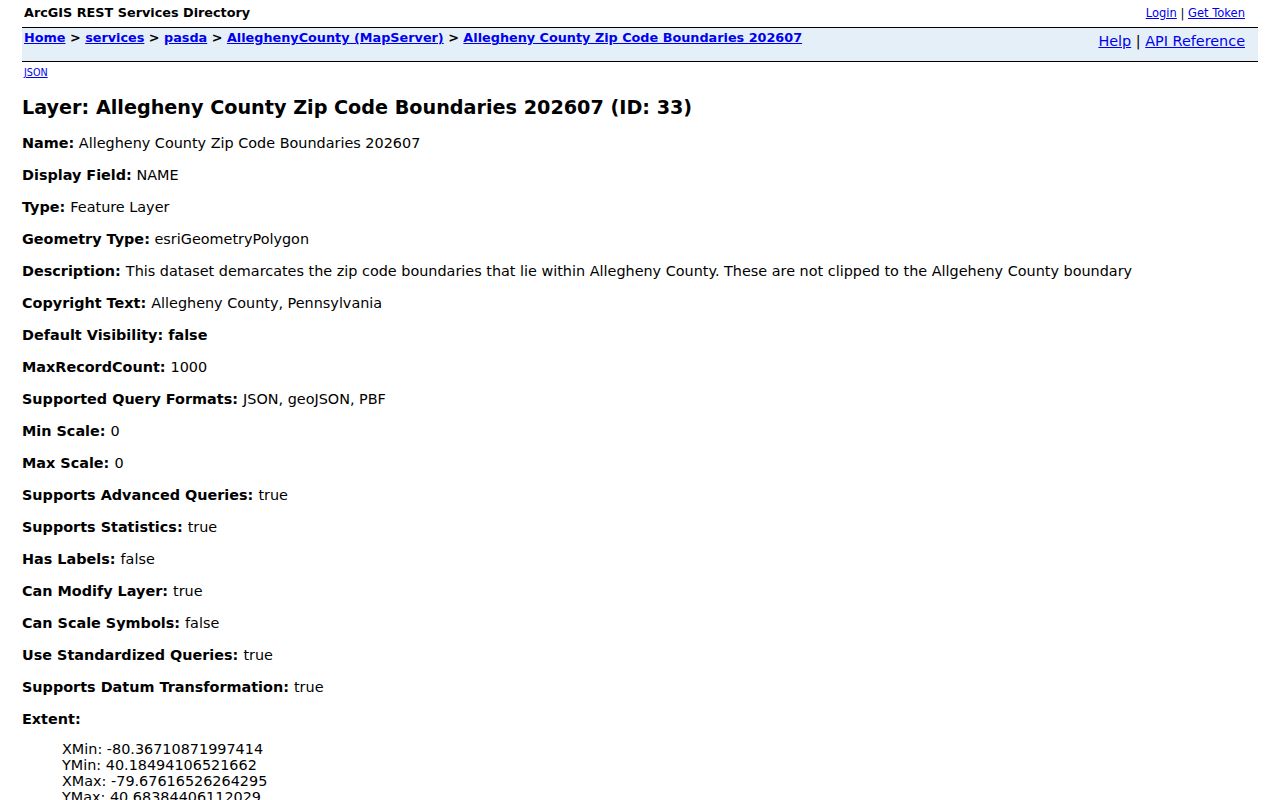
A ZIP result does not prove a person is at an address. Use an exact address and the correct custodian for the question at hand.
Baldwin Neighbor Voter Limits
Pennsylvania’s individual voter-status service is for a person’s own registration and polling information. It is not a street-browse tool. Election Code street lists exist under supervised inspection or request conditions, but they are an access channel with field limits and use restrictions. The State distinguishes public-information, street, walking-list, and full-export products. A street list can include name, residential or mailing address, party, and status, while a walking list omits mailing address.
Allegheny’s Street List request form requires an identification and use affirmation, and the County states that it responds by email within two business days. The form prohibits internet publication and improper use. Confidential voters are absent from routine display, and voting history identifies participation, never ballot selections. For a block question, that means a lawful request cannot become a public roster of Baldwin neighbors.
Note: Election-list access rules restrict how registration information may be requested, used, and shared with other people.
Baldwin Neighbor Community Contacts
Baldwin’s official Links page provides a civic contact layer, not evidence of who belongs to an organization or lives nearby. The listed resources can direct a reader to public services, local history, or a group that serves the broader community. No municipal neighborhood-association, HOA, block-watch, or civic-member directory was located in the research. Treat a public contact as a way to reach an organization, never as a neighborhood membership record.
| Baldwin-linked resource | Useful public connection | Directory boundary |
|---|---|---|
| Baldwin Borough Library | Library and local-reference access | Not a roster of patrons or nearby households |
| Baldwin-Whitehall School District | Public institutional contact | Not student or family-directory access |
| Brentwood/Baldwin/Whitehall Chamber | Regional civic and business contact | Not evidence of a person’s residence |
| Baldwin EMS and fire companies | Public service contacts | Not a block-member list |
| Baldwin Kiwanis Club | Civic organization contact | No public member directory was located |
| Congress of Neighboring Communities | Regional community referral | Not a household directory |
Baldwin Borough’s community links identify these public referrals.
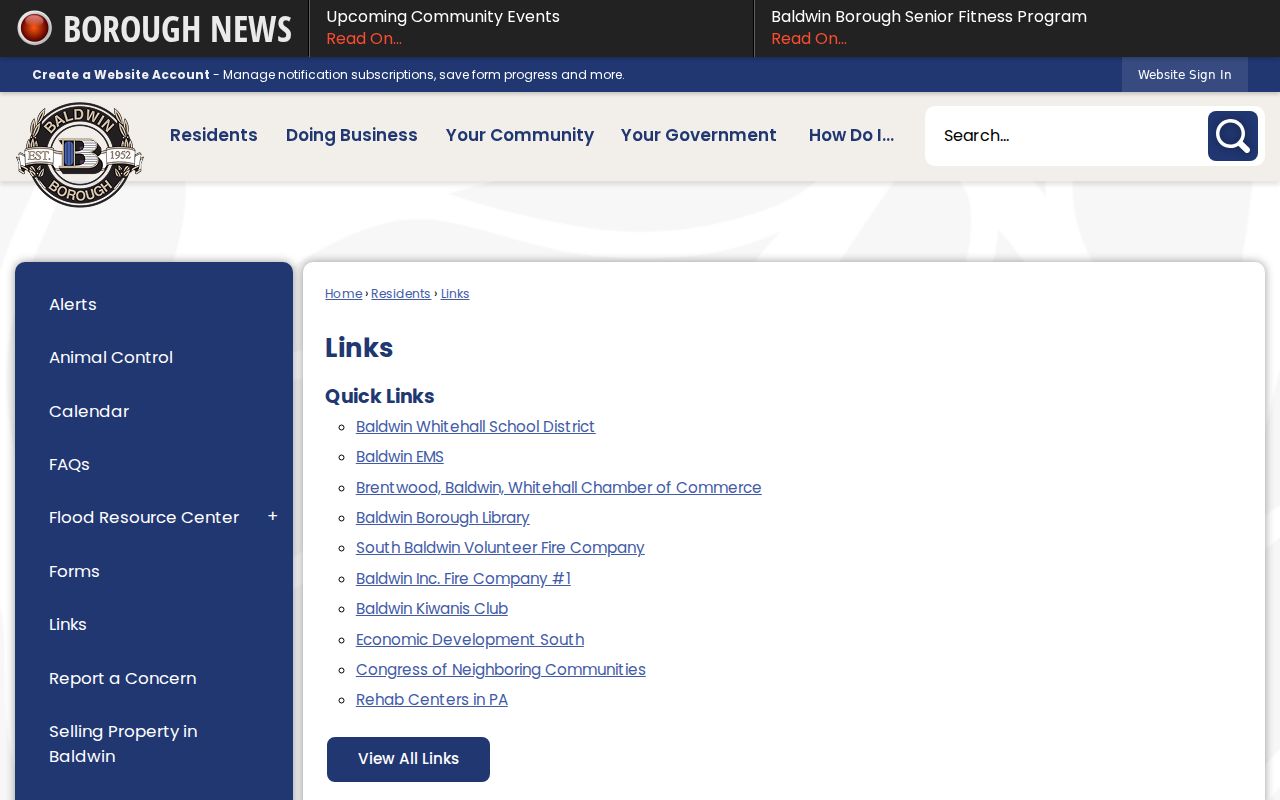
These contacts add civic context around a Baldwin block while keeping member and household information private.
No Baldwin Neighbor Roster
No official municipal neighborhood, HOA, block-watch, or civic-member directory was found for this research. The absence is meaningful. Baldwin Borough records can be requested by a specific address, parcel, record type, and time period when an eligible record exists, but the Pennsylvania Right-to-Know Law does not require the Borough to build a custom list of everyone connected with a street.
The documented municipal alternatives are Agenda Center material, permit or inspection context, lien or sewer and occupancy procedures, and a focused Right-to-Know request. Ask for an existing document and expect exemptions or redaction when required. A delayed, denied, or redacted response does not establish that a person is or is not present at an address. That boundary treats a block record as a record, not a list of people.
Baldwin Neighbor Privacy Limits
Pennsylvania’s Address Confidentiality Program can provide an eligible survivor with a substitute mailing address, and actual address information is protected from routine disclosure. Court records can be sealed or limited, voter records protect confidential participants and identifiers, driving records have separate privacy rules, and vital records have closure periods. Private utility, delivery, and household information does not become public because a parcel is visible on a map.
Lawful use. Use Baldwin block records for property history, family research, civic questions, or personal safety awareness. Do not use record information to watch, threaten, harass, or intimidate another person.
When a record needs correction, contact its actual custodian. Baldwin handles local address assignment, County Address Management maintains the central address record, and the courts, elections office, and vital-record custodian control their own files.